The Top 3 Advantages of Remote Cloud Production

Add agility to your capabilities
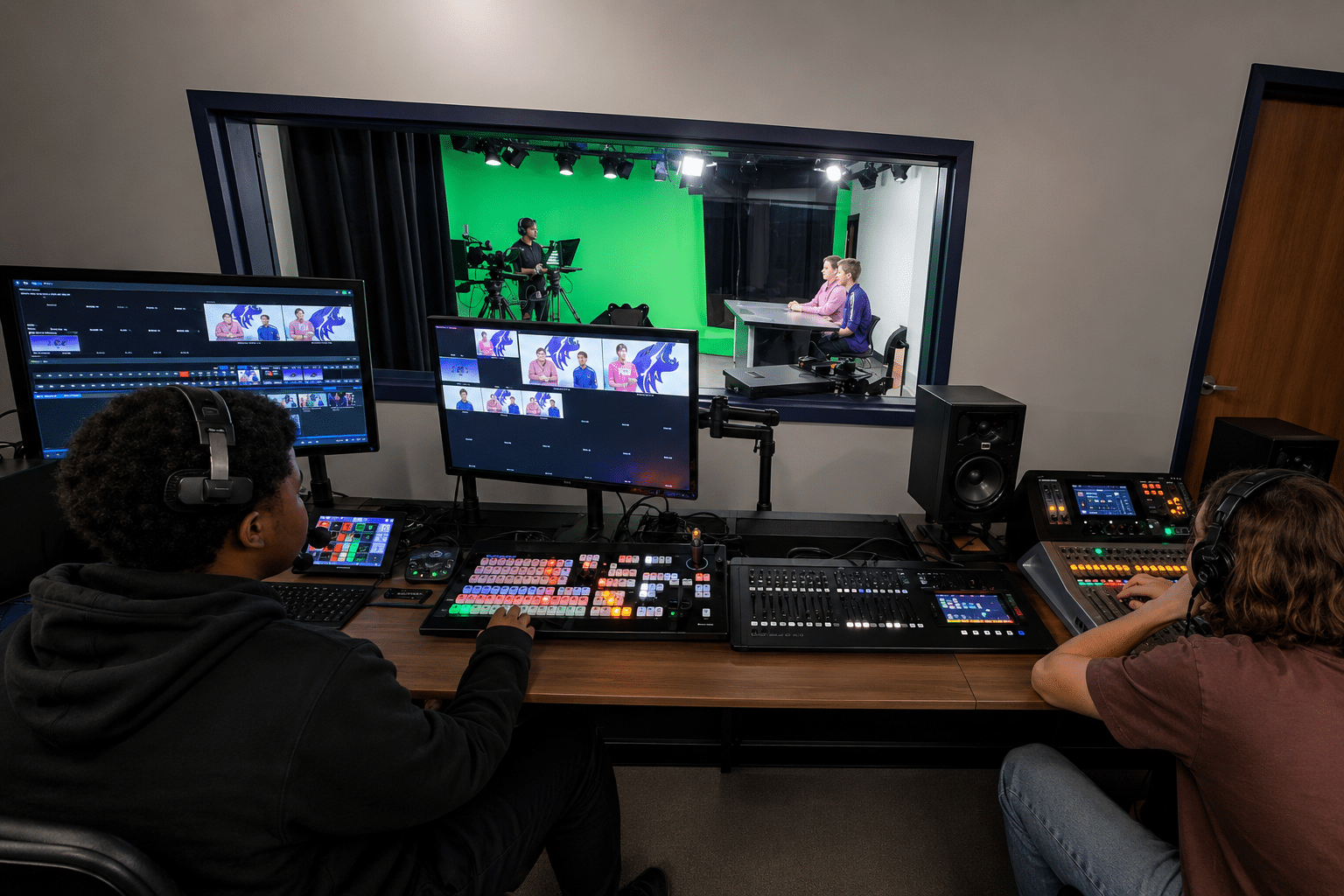
Traditionally live-broadcast production has required a significant presence where your event is taking place. Setup can be expensive and time-consuming. Remote cloud production alters the dynamic profoundly by allowing you to produce content from a ground-based infrastructure location other than the event site. And that changes everything.
The advantages of remote cloud production
To understand how remote production benefits producers, let’s first look at what makes it unique. In remote production, onsite and remote crews collaborate using technologies such as IP-enabled cameras, remote control systems and high-speed internet. It differs from live cloud production, where production, distribution and delivery are all handled in the cloud, and from hybrid cloud production, where producers employ a mix of virtual cloud-based and ground-based technologies.
All three forms of cloud production have compelling attributes. In this article, we’ll zero in on the principal advantages of remote cloud production.
To learn more about the three forms of cloud-based broadcast production, click here.
1. Scale production to meet demand
The greater your freedom from physical hardware limitations, the easier it is to add – or cut back on – capabilities in any given situation. From audio sources to graphics processing, resources can be allocated much more dynamically versus a traditional ground-based operation.
Moreover, decoupling the production process from the event site enables production teams to work from anywhere there’s an internet connection. Talent, expertise and production resources can be accessed globally rather than assembled locally.
Everything happens faster with the cloud. After all, since much of the production workflow is managed remotely, there’s no need for on-site installation of cumbersome equipment or infrastructure. You can scale faster and more fully than you ever imagined.
2. The advantage of flexibility
Compared to traditional ground-based production, remote cloud production offers flexibility in several ways.
By separating the production site from the event site, remote cloud production makes it much easier to access the talent, resources, and expertise you need. And because remote production platforms are typically cloud-based, you can add cameras, audio sources or graphics overlays more easily than ever before. Moreover, when unexpected events, technical issues, or scheduling changes occur, you’ll find it much simpler to adjust plans, workflows, and resources remotely. Additionally, the integrated tools and workflows offered by remote production platforms make collaboration more efficient and effective, reducing the time and labor needed to respond to unforeseen events.
3. Expect a more cost-efficient operation
By leveraging cloud-based solutions over traditional on-premises setups, you gain cost efficiencies through reduced infrastructure costs, scalability on demand, and minimized maintenance. This approach enables you to streamline operations, optimize resource use, and focus spending where it matters most, ultimately achieving higher quality results at a fraction of the cost.
Consider the impact on infrastructure costs. Remote and Cloud Hybrid production reduces your reliance on broadcast studios, control rooms and production facilities, for example. That means lower upfront capital investment and reduced ongoing maintenance costs compared to ground-based systems. You’ll also be less reliant on specialized equipment – and thus more insulated from costly equipment purchases and upgrades – since more of your production will be managed via software-based solutions and off-the-shelf hardware.
Improved speed of deployment also boosts cost-efficiency. So will savings on staffing, utilities and facility maintenance. And remember, too, that remote production platforms often operate on a subscription or pay-as-you-go model, which optimizes resource use and reduces the chance of over-provisioning. Suddenly major capital expenses become predictable operating expenses.
Maximizing the benefits of remote cloud production
Creating an infrastructure and establishing best practices for remote production requires a methodical approach. Transitioning from traditional production to cloud production always does. But the evolution from on-premises to remote production has the potential to make your business more efficient and capable than ever before. Make sure you partner with an experienced systems integrator who has access to a broad range of solutions to augment and sync with your existing capabilities. The more thoughtful and deliberate your approach, the more you’ll profit from remote production.