AV and Broadcast Production for Schools: How Districts Are Building Studios That Launch Student Media Careers
Key Takeaways
- A successful campus media program combines technology, educator training, and long-term infrastructure planning.
- Centralized broadcast studios help schools maximize budgets while creating a professional environment for student media production.
- Connected campus-wide production systems allow schools to manage athletics, performing arts, announcements, and live events from a unified workflow.
- Students gain hands-on experience with industry-standard technologies including switching, audio mixing, graphics, replay systems, and live streaming.
- A modern CTE broadcast program mirrors real-world media operations, helping students develop career-ready skills before graduation.
- Schools can scale their broadcast infrastructure over time without replacing existing investments.
- Professional-grade production environments create pathways into broadcasting, sports production, communications, and other media production careers.
AV and broadcast production for schools has never been more relevant or achievable.
Student interest in media, content creation, and live production is at an all-time high. Simultaneously, the broadcast and media industry is actively looking for entry-level talent that understands live production workflows, multi-camera production, and connected digital environments. The gap between what students want to learn and what the industry needs is closing, and modern CTE programs are where they intersect.
The challenge for many districts is infrastructure. How do schools build industry-standard media production programs that prepare students for real careers, are scalable and can grow with the program, and are manageable enough that educators can confidently run them?
In this blog, we’ll explore how schools are building modern broadcast production environments that support student learning, streamline operations, and create pathways into media and production careers.
Why a Centralized Broadcast Studio Is the Foundation of a Strong School Program
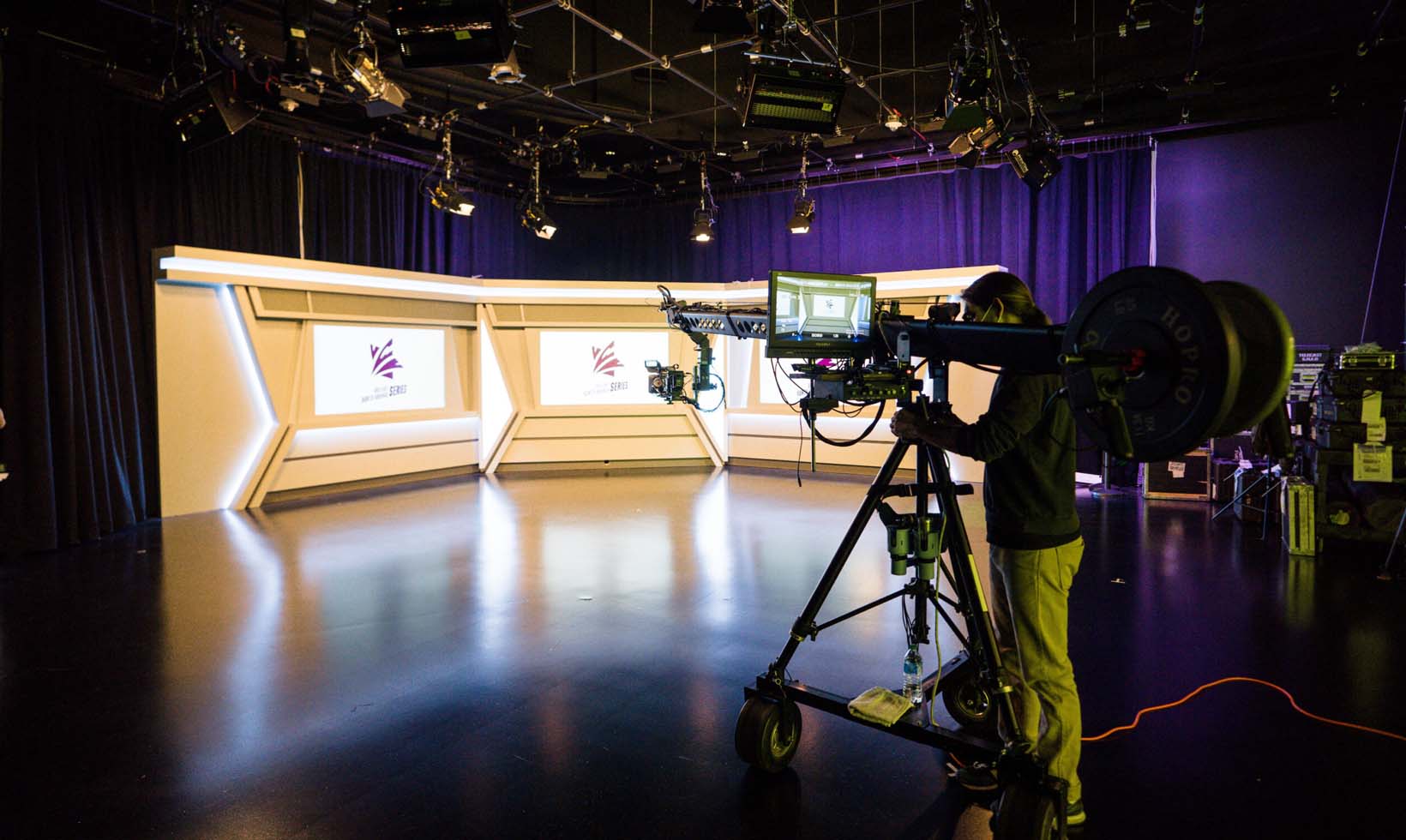
The most efficient school AV and broadcast production programs are built around a centralized studio— one dedicated space that functions as the operational hub for content creation, educational broadcasting, and hands-on student learning.
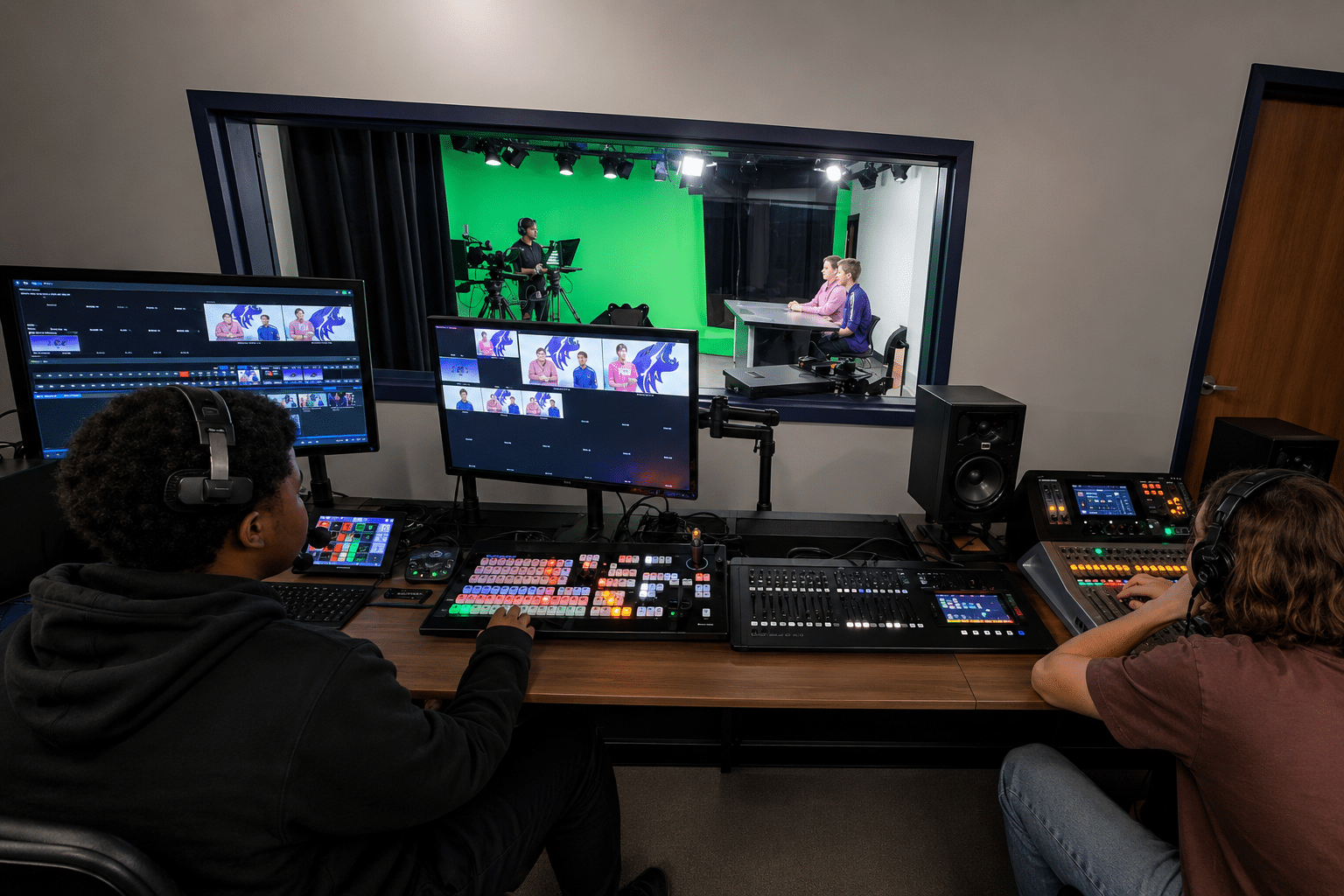
Rather than spreading equipment across multiple classrooms or departments, a centralized studio consolidates your core production resources: cameras, switchers, audio, graphics, and streaming outputs. This single environment can support morning announcements, athletics coverage, performing arts productions, and district-wide communications from one location and one teachable workflow.
For districts managing limited budgets, this model is especially powerful because it:
- Eliminates duplicate equipment purchases across multiple rooms
- Simplifies maintenance and system management for staff
- Scales incrementally as the program grows and budgets allow
Beyond efficiency, a centralized school broadcast studio puts students inside a real production environment that supports hands-on learning through school video production and prepares them for future careers.
Connecting Your School’s Broadcast Infrastructure Across Campus
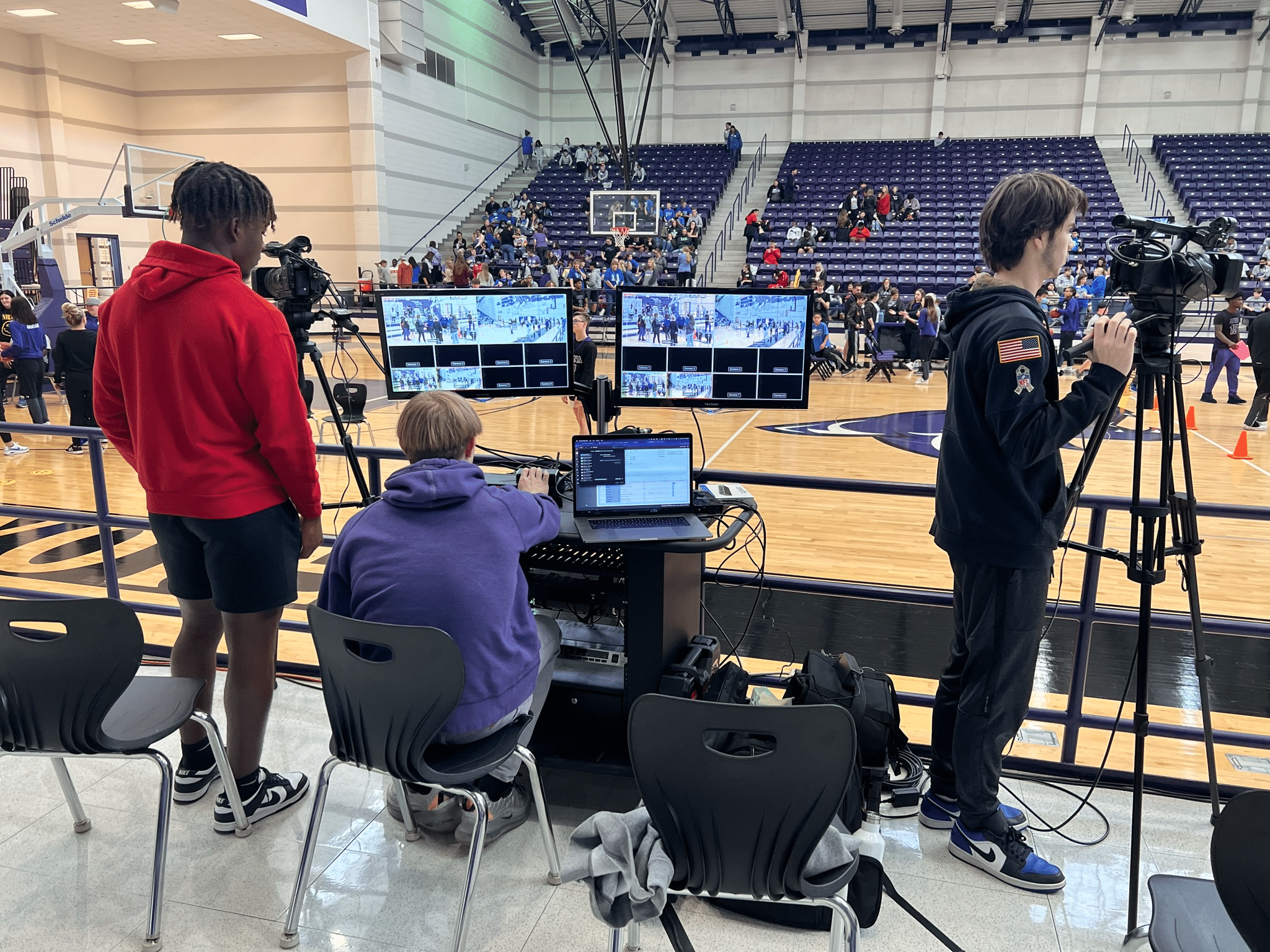
Most schools already have more production infrastructure than they realize. Cameras at athletic facilities. AV systems in auditoriums. Display setups in media labs and event spaces. The problem is that these environments typically operate independently, with no system in place to connect them into a unified production workflow.
Bridging those environments changes everything for a CTE broadcast program. When a school connects their broadcast infrastructure across campus, production teams can pull feeds from the gym, the auditorium, and the studio simultaneously. Remote operators can contribute from different locations. Multiple events can be managed and streamed at the same time without duplicating effort or equipment.
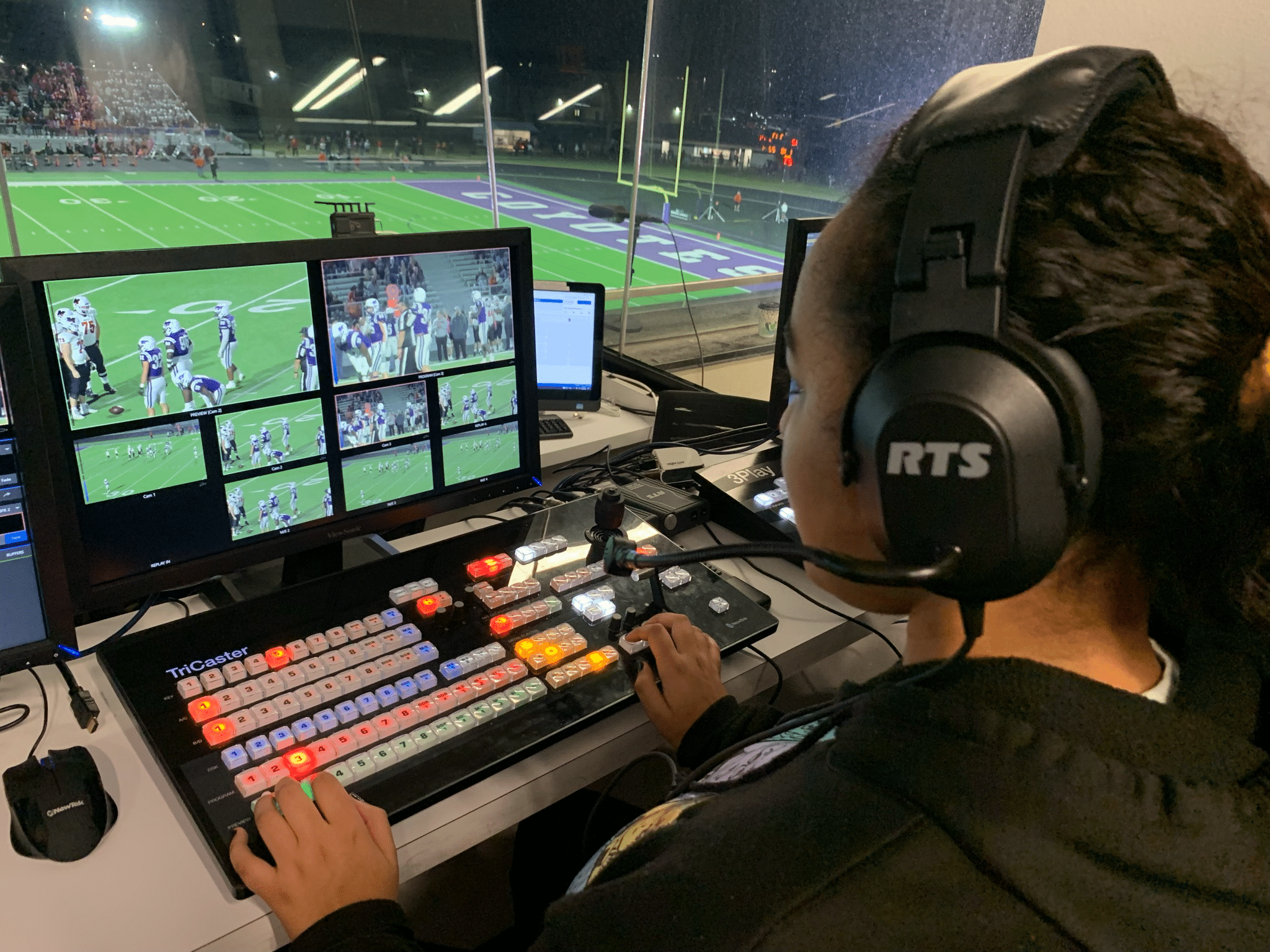
A connected broadcast setup allows schools to:
- Unify multiple production spaces under one operational system
- Enable real-time collaboration between students in different locations
- Create collaborative production environments that mirror professional media operations
- Share school video production resources across departments
- Expand live production output without rebuilding existing infrastructure
- Mirror the distributed production models used in professional broadcast environments
This matters for students as much as it matters for real-world operational environments. Today’s broadcast professionals don’t work in isolated booths—they coordinate across teams, manage remote contributors, and operate inside IP-connected production ecosystems. The earlier students experience that reality, the better prepared they are for it.
Preparing Students for Real-World Media Careers
Career readiness is the goal of every CTE broadcast program. The depth of what students can learn inside a well-built school broadcast environment gives them a competitive advantage when they enter media production careers.
Students working inside a connected broadcast studio gain hands-on experience with:
- Live multi-camera direction and switching
- Audio mixing and signal routing
- Graphics and lower-third systems
- Instant replay workflows
- Live streaming and content distribution
- IP-based and remote production environments
- Team-based communication under real-time production conditions
These aren’t abstract skills. They’re the exact competencies that broadcast employers, college media programs, and sports production companies look for in entry-level candidates. Students who graduate from a professional-grade school broadcast program arrive at their first professional opportunity with muscle memory and confidence to run the systems they already know.
How Alpha Helps Schools Build Modern Broadcast Production Programs
AV and broadcast production for schools isn’t a one-size-fits-all project. Every district comes in with different existing infrastructure, different program goals, and different budget realities. What stays consistent is the objective: build something that works for educators today and grows with students over time.
At Alpha, we specialize in helping districts design and integrate broadcast production environments that support student media production—from initial studio builds and centralized control rooms to fully connected campus-wide systems. We work with CTE coordinators, administrators, and educators to make sure the infrastructure matches the program, not the other way around.
We also know that putting industry-standard equipment in a room is only half the equation. Educators need to feel confident operating it before they can effectively teach it. This is why Alpha connects schools with the right training resources to make sure teachers and program leads aren’t left to figure it out on their own. From hands-on equipment training and manufacturer-led sessions to ongoing support as the program evolves, we make sure the people running the program feel as prepared as the students they’re preparing.
If your team is ready to launch or expand your campus media program, let’s talk about what’s possible. Together, we can create a future-ready environment that supports live production workflows in education, hands-on learning through media production, and long-term student success.
Connect with an Alpha education specialist.
FAQ: Broadcast Production for Schools
How do schools get started with a broadcast production program?
Most programs begin with a core studio setup: a multi-camera configuration, a production switcher, a basic audio board, and a streaming or recording output. From there, programs expand based on campus needs and budget. Working with a broadcast AV integrator helps schools design a system architecture that is built to scale, so early investments don’t become obstacles as the program grows.
What’s the cost of building a school broadcast studio?
Program costs vary significantly based on the scale of the build, the number of connected spaces, and the level of equipment specification. Many districts start with a foundational studio setup and expand over time. Others use bond funding, CTE grants, or partnership with a district-wide initiative to build more comprehensively from the start. An integrator can help match the build to both the program goals and the available budget.
How does school broadcast production connect to real career pathways?
Broadcast, sports production, live events, corporate communications, and digital media are all industries that hire directly from CTE and collegiate media programs. Students who graduate with hands-on experience in live switching, streaming, audio, and graphics workflows are competitive candidates for entry-level roles in a variety of media production careers.
What equipment is needed for a school broadcast production studio?
A typical school broadcast studio includes cameras, a video switcher, audio mixer, graphics system, recording equipment, and live streaming capabilities. Many schools start with a foundational setup and expand as their program grows.
What careers can students pursue after participating in an AV broadcast production program?
Students can pursue careers in broadcast television, sports production, live events, digital content creation, corporate communications, audio production, and media technology. Many also continue into college media and communications programs.
Can schools stream athletic events and other performances from one production system?
Yes. Modern connected production environments allow schools to manage broadcasts from gyms, auditoriums, stadiums, and studios through a centralized workflow, improving efficiency and reducing equipment duplication.
How can schools fund an AV and broadcast production program?
Schools often use CTE funding, bond initiatives, grants, district technology budgets, and workforce development programs to support school broadcast studio projects and production infrastructure upgrades.
Why is hands-on media production important for student learning?
Hands-on production allows students to develop technical skills, teamwork, communication, problem-solving abilities, and real-world operational experience that directly aligns with workforce needs in media and broadcasting industries.